
Modern healthcare generates more data than ever. Medical records, lab results, medical imaging, doctor-patient conversations, reports, diagnostic tests, treatments and constant follow-ups are all part of a digital ecosystem that grows at high speed. Every interaction leaves a trail of information that, used well, can completely transform care.
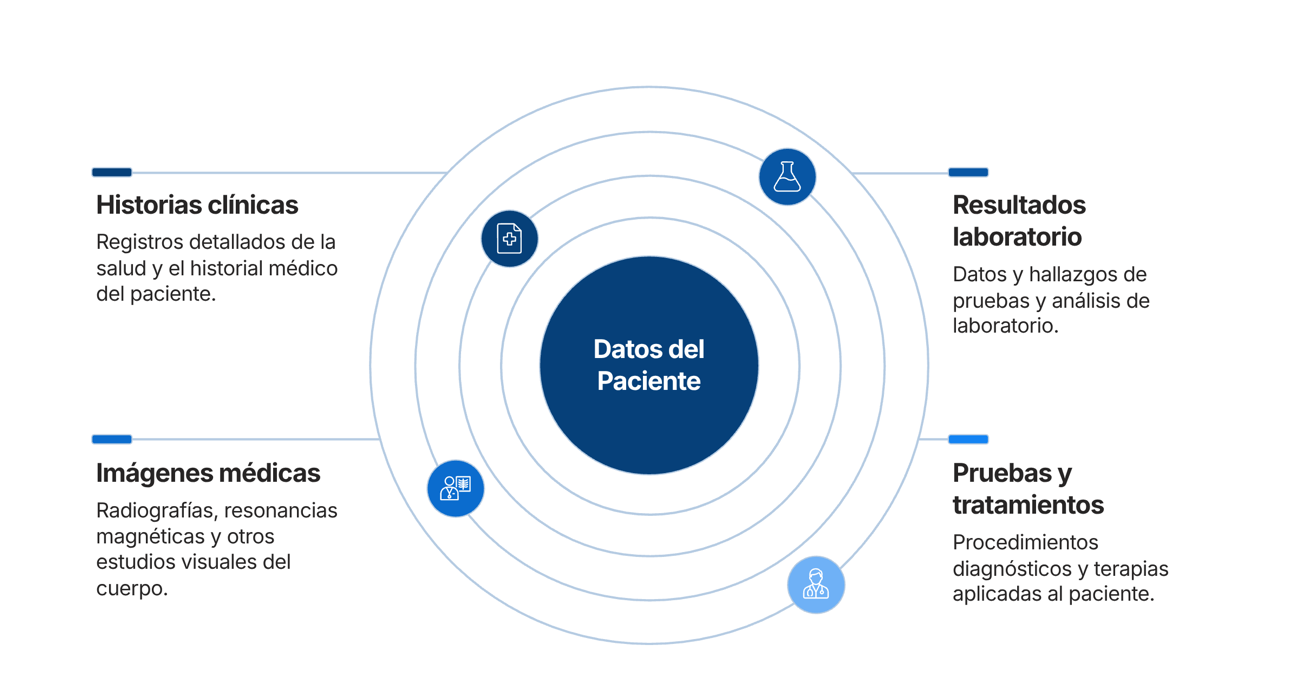
That is why the real challenge is not a lack of data but the difficulty of turning all that information into useful, fast and actionable decisions within everyday clinical work.
This is where active intelligence comes in, a new approach that is redefining the relationship between technology, healthcare professionals and patients.
Unlike traditional models, where clinical data sits passively stored in hospital systems, active intelligence turns that information into an operational layer able to assist, automate and anticipate processes in real time. It is no longer just about storing data, but about making data work actively to improve clinical and operational efficiency.
At Omniloy we are driving this transformation through AI agents integrated directly into the hospital workflow, able to interpret clinical information, automate documentation and significantly reduce the administrative burden on healthcare staff.
The problem of clinical information overload
In recent years, hospitals and medical centers have invested heavily in digitization. Electronic health records, management platforms and interoperable systems have made it possible to centralize enormous amounts of information. However, digitizing processes does not always mean optimizing clinical work.
Today many healthcare professionals spend a considerable part of their day navigating between systems, reviewing documentation or searching for information fragmented across multiple platforms. This administrative overload causes fatigue, increases pressure on care and reduces the time available for direct patient care.
The consequence is clear: there is more data than ever, but less human capacity to process it efficiently in real time. Active intelligence is born precisely to resolve that imbalance.
From clinical data to clinical context
An isolated data point has limited value. A lab result, a diagnostic test or a clinical note only acquire real meaning when interpreted within the patient's complete context.
Active intelligence makes it possible to connect scattered information and turn it into useful clinical knowledge. Thanks to the combination of generative artificial intelligence, natural language processing and contextual automation, systems can understand relationships between history, medication, clinical progress and symptoms to offer relevant assistance at the right moment.
This lets professionals quickly access clinical summaries, relevant alerts or prioritized information without disrupting their usual workflow. AI stops being an external tool and becomes infrastructure integrated within the healthcare environment itself.
That shift is especially relevant in settings where speed and precision are essential. From the emergency department to chronic patient follow-up, the ability to interpret data in real time can improve both operational efficiency and quality of care.
The new generation of AI applied to health
The evolution of artificial intelligence in healthcare is no longer limited to predictive analytics or statistical processing. The new paradigm is built on systems able to interact, understand clinical language and collaborate directly with healthcare professionals.
There are already clinical assistants able to listen to doctor-patient conversations, automatically generate structured documentation and retrieve relevant information from the medical record in a matter of seconds.
In this scenario, solutions developed by Omniloy exemplify a new generation of AI agents designed to operate within the real hospital environment. Automating administrative tasks and optimizing processes reduces operational load and frees up high-value clinical time.
This technological evolution is also driving the development of open, collaborative ecosystems within the medical field. Initiatives such as MONAI Project, an open-source framework specialized in medical artificial intelligence, are accelerating innovation in image analysis, interoperability and advanced clinical models.
A better experience for professionals and patients
Active intelligence does not only transform the experience of healthcare staff. It also changes the relationship between patients and the health system.
Automated processes help reduce waiting times, improve communication between hospital and patient and enable far more personalized follow-up. From smart reminders to automating administrative queries, AI helps build a smoother, more accessible healthcare experience.
At the same time, professionals can devote more time to clinical tasks and less to repetitive or bureaucratic activities. Technology does not replace clinical judgment or the human relationship. Its real value lies in amplifying the capacity of healthcare teams and letting them focus on what truly matters: patient care.
Privacy, trust and clinical safety
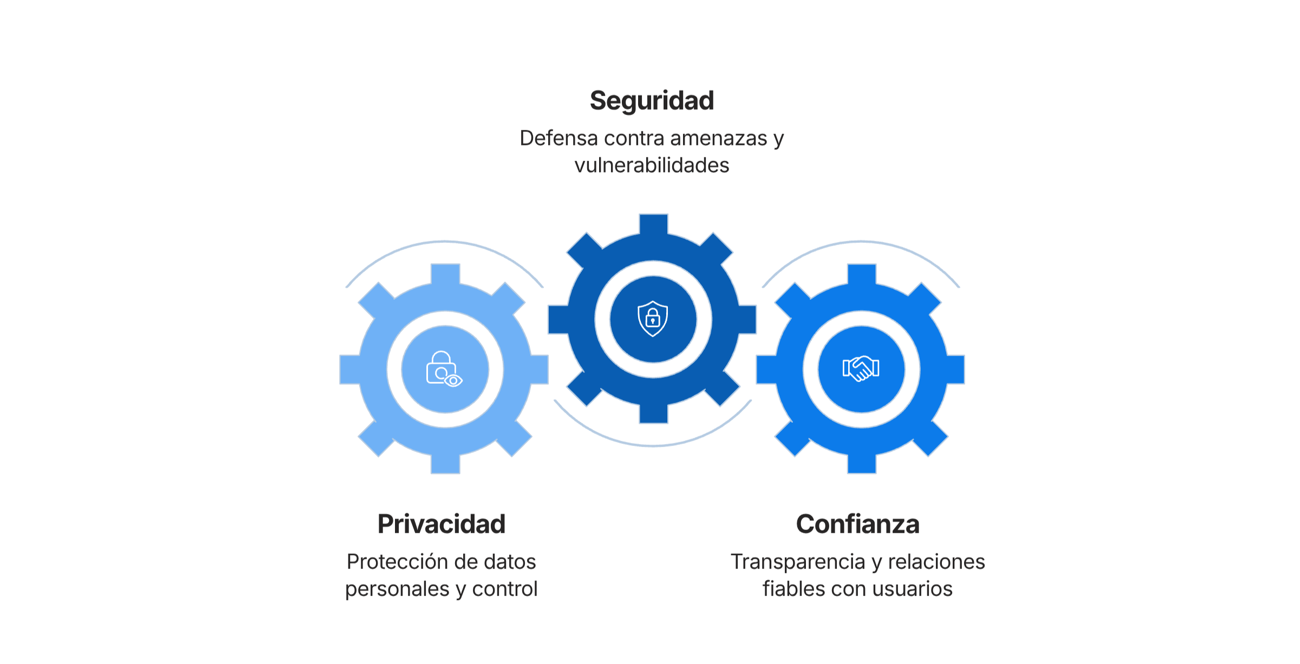
Bringing artificial intelligence into healthcare settings also raises important challenges related to privacy, security and trust.
Clinical data is extremely sensitive and requires secure, auditable systems compatible with current healthcare regulations. That is why more and more organizations prioritize solutions able to operate in protected environments with clear governance models over how information is used.
Trust in clinical AI does not depend solely on technical accuracy. It also depends on the systems' ability to be transparent and explainable to professionals and patients.
As active intelligence becomes integrated into hospitals and medical centers, the combination of technological innovation and clinical responsibility will be one of the key factors for its adoption at scale.
The future of healthcare will be intelligent
The coming decade will be marked by hospitals able to operate with intelligence integrated into every layer of the health system. Environments where clinical information flows actively between professionals, platforms and patients to enable faster, more precise and more efficient decisions.
Active intelligence represents a new stage in the digital evolution of health. It is not only about automating tasks or adding virtual assistants. It is about building healthcare systems able to actively collaborate with people and improve the overall functioning of medical care.
Because when technology manages to reduce friction, remove bureaucracy and free up clinical time, professionals can return to what matters most: taking better care of people.
Want to see how active intelligence can fit into your hospital? Talk to our team.